

 Share
Share



Entering the world of automated crypto trading can feel overwhelming with so many platforms promising effortless returns. The truth is that trading software is a tool for executing structured rules—not a guaranteed path to wealth. When applied correctly, crypto bots bring discipline, speed, and 24/7 coverage to your trading workflow.
AlgoBot provides a transparent toolset for users looking to automate their crypto strategies safely. This beginner’s guide breaks down how crypto bots operate, how exchange APIs work, and how to configure risk settings to protect your capital.
Key Takeaways
- Automated crypto trading is an execution framework that requires sound strategy logic and risk rules.
- Automated stop-losses and position limits are essential for navigating continuous weekend and overnight crypto volatility.
- Keep exchange API permissions restricted strictly to reading and trading—never grant withdrawal rights.
- Always validate bot connections and strategy parameters in paper trading mode before using live funds.
- AlgoBot pairs multi-exchange routing with pre-built risk controls to simplify automated crypto trading.
Why Crypto Traders Use Automation
Crypto markets trade 24 hours a day, seven days a week. Automation helps traders respond to signals, manage orders, and follow rules even when they are away from the screen.
Because digital asset markets never close, manual traders face continuous exposure to overnight volatility and sudden price gaps occurring across global time zones. Relying solely on manual monitoring often leads to fatigue, missed entries, and delayed emergency exits.
Automated execution bridge tools allow continuous monitoring of order books and technical indicators. By delegating signal recognition and order placement to algorithms, traders maintain consistent operational presence across 24/7 market cycles.
What Automated Crypto Trading Means
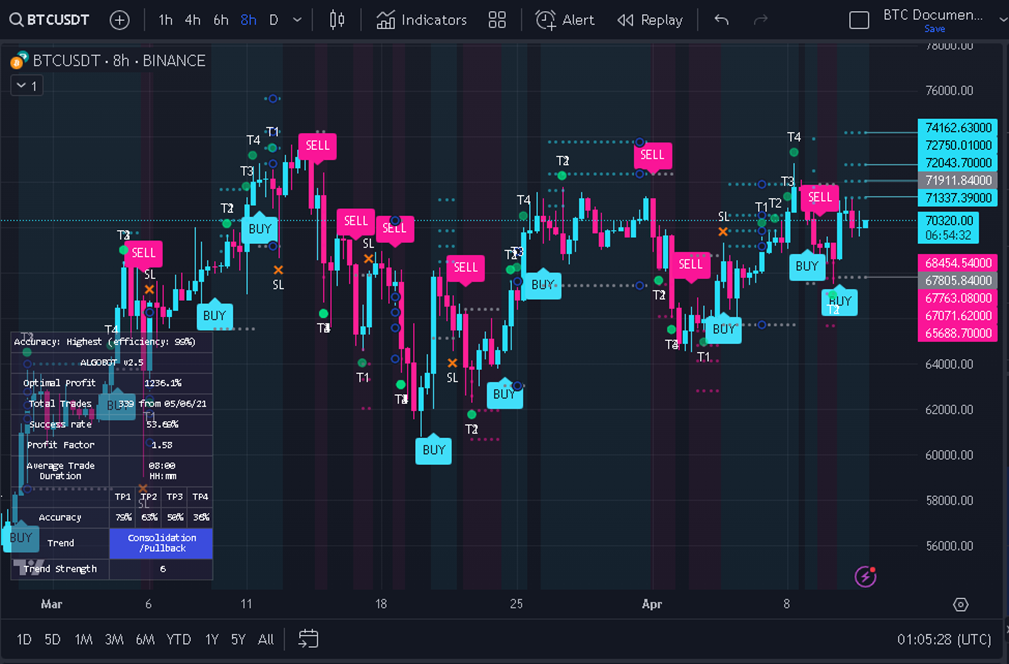
Automated crypto trading uses software to generate signals, place orders, or manage positions on an exchange. Some tools are fully automated, while others require manual approval before execution.
In practice, automated crypto software acts as an intermediary between charting software, quantitative logic engines, and centralized or decentralized exchange order books. Depending on user preference, setups range from alert notifications that require manual confirmation to fully automated API order execution.
The system translates specific condition parameters into structured REST API or WebSocket requests sent directly to the exchange, ensuring trade orders execute instantly upon condition validation without human delay.
Common Bot Strategies
Common strategies include trend following, breakout trading, mean reversion, grid trading, and signal copying. Each has different risk behaviour and should be understood before use.
Trend-following and breakout algorithms capitalize on strong momentum movements in liquid pairs like BTC and ETH, while grid and mean-reversion bots exploit sideways consolidation by placing staggering buy and sell orders across defined price bands.
Every strategy framework thrives in specific market regimes and carries distinct structural vulnerabilities. Understanding whether an algorithm relies on trend continuation, range stability, or signal provider accuracy is critical before allocating capital.
Exchange Permissions
When connecting a bot to an exchange, users should review API permissions carefully. A bot usually needs trading access but should not need withdrawal permission. Keeping permissions limited is a basic security step.
Security protocols require strict restriction of API key permissions within exchange account settings. Software integrations should be restricted strictly to “Enable Reading” and “Enable Spot/Futures Trading” capabilities, keeping all fund transfers locked.
Disabling withdrawal permissions ensures that even if an API key or third-party endpoint is compromised, underlying exchange funds cannot be transferred or removed from the user’s primary account balance.
Risk in 24/7 Markets
Crypto can move sharply during weekends, overnight sessions, and news events. Bots should use stop losses, position limits, and maximum exposure rules to prevent one move from causing oversized damage.
The cryptocurrency market’s continuous nature makes it especially vulnerable to sudden liquidity thin-outs during weekend sessions and fast liquidations across leveraged derivatives markets, amplifying price slippage.
Automated risk management must include strict hard stop-loss orders placed directly on the exchange order book, alongside portfolio exposure limits that halt further position opening when volatility exceeds defined thresholds.
Starting Safely
Beginners should start with education, small size, conservative settings, and clear monitoring. Automation should make trading more disciplined, not encourage blind risk-taking.
Safe adoption begins with sandbox paper trading or testnet execution to verify API connectivity, order routing accuracy, and parameter execution without live financial exposure. This testing phase reveals operational issues prior to committing real capital.
When transitioning to live markets, trading with minimum lot sizes allows traders to monitor execution slippage, exchange commission impacts, and strategy behavior under real liquidity conditions, scaling exposure gradually as performance validates backtest expectations.
Practical Example
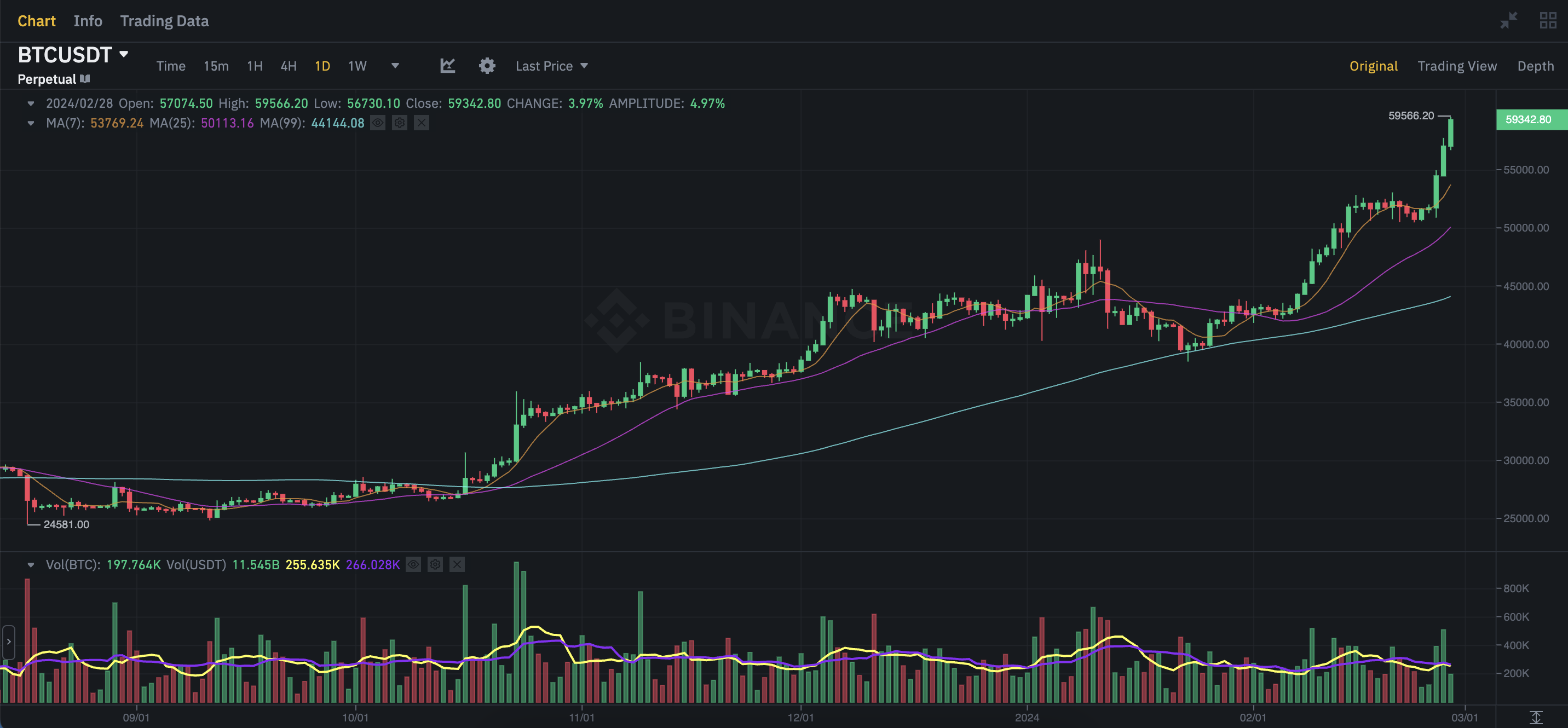
Imagine a trader watching crypto markets while managing a busy work week. Manually trying to catch breakouts on BTC/USDT or ETH/USDT often leads to chasing price spikes late or panic-selling during healthy pullbacks. In an automated crypto workflow, the setup is defined in advance: entry triggers, position sizing, stop-loss placement, and take-profit targets. When price breaches key levels on volume, the system automatically routes the order via API directly to the exchange, securing the entry cleanly while maintaining fixed downside protection.
Common Mistakes Beginners Make
- Granting third-party bots API withdrawal permissions instead of restricting access strictly to read and trade functionality.
- Deploying aggressive grid strategies into strong, one-way trending crypto markets.
- Ignoring the impact of weekend liquidity drops, slippage, and funding rates on open derivative positions.
- Connecting live exchange accounts without validating strategy logic in paper trading mode first.
- Treating automated trading software as a hands-off passive income scheme rather than an execution tool requiring ongoing supervision.
How AlgoBot Can Fit Into the Workflow
AlgoBot fits into the crypto trader’s workflow as a disciplined execution engine that prioritizes risk mitigation above all else. Beginners can use AlgoBot to connect directly to top crypto exchanges via secure, trade-restricted API keys. With pre-built risk controls—such as hard stop-losses, daily drawdown protection, and position limits—AlgoBot ensures that automated crypto trades are executed with institutional-level precision across 24/7 market cycles.
Final Thoughts
Automated crypto trading is ultimately about building a structured, repeatable strategy. Rather than reacting emotionally to every price chart swing, automation allows you to define entry rules, downside protection, and profit targets in advance.
When choosing a crypto bot platform, focus on security, ease of setup, and risk management capabilities. AlgoBot provides the tools, transparent integrations, and conservative settings needed to approach crypto automation with discipline and confidence.
FAQs
Is automated crypto trading safe?
It can be made safer with limited permissions, small size, and risk controls, but trading risk remains.
Can bots trade while I sleep?
Yes, if connected and configured correctly, but monitoring and limits are still important.
Should a crypto bot have withdrawal access?
Generally no. Trading bots should not need permission to withdraw funds.
Educational content only. Trading involves risk, and past or historical performance does not guarantee future results.