
 Share
Share


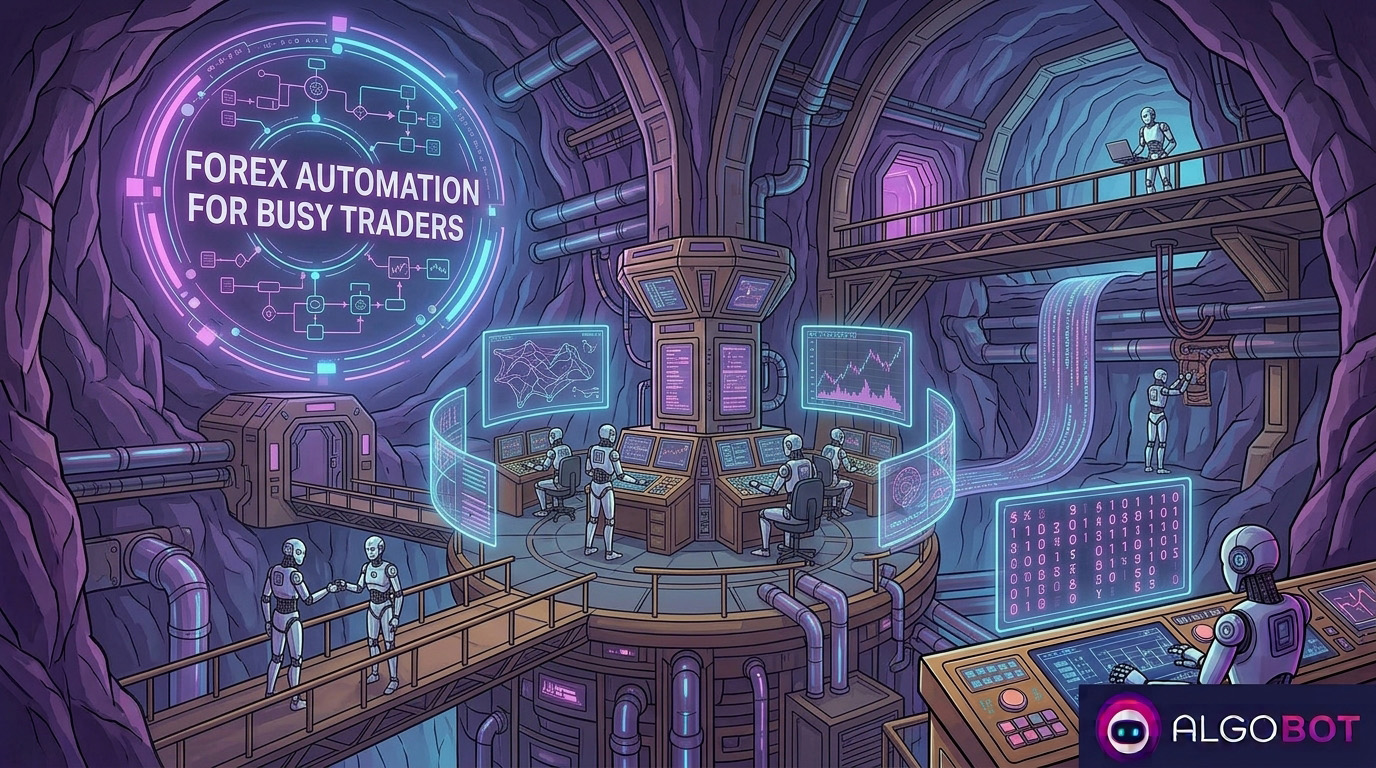
For working professionals, business owners, and active individuals, one of the biggest challenges in financial markets is time. Full-time careers and personal commitments make sitting in front of price charts for six to eight hours a day nearly impossible. As a result, part-time traders often experience missed entries, emotional trade execution during brief lunch breaks, or neglected stop-loss updates during busy workdays.
Forex automation bridges this gap by transferring routine market scanning, pattern detection, and order execution to specialized algorithmic software. Rather than guessing entries on mobile phones or rushing analysis between meetings, busy traders can deploy automated trading systems that monitor the market 24/5 with absolute precision.
However, automation is an execution tool—not a hands-off passive income shortcut. Platforms like AlgoBot enable busy traders to automate repetitive execution and enforce strict risk management while keeping full strategic control over their capital.
Key Takeaways
- Forex automation eliminates screen-time fatigue by continuously monitoring currency pairs and executing pre-programmed setup conditions.
- Automated systems enforce objective risk management rules, preventing emotional missteps like revenge trading or moving stop losses.
- Automation should be viewed as a systematic workflow assistant rather than a hands-free passive investment scheme.
- Busy traders benefit most by combining session-specific execution windows, macro trend filters, and dynamic ATR-based risk controls.
- AlgoBot bridges the gap for busy professionals by executing complex strategy logic directly to MetaTrader and exchange APIs 24/5.
The Core Problem: Why Part-Time Manual Trading Fails
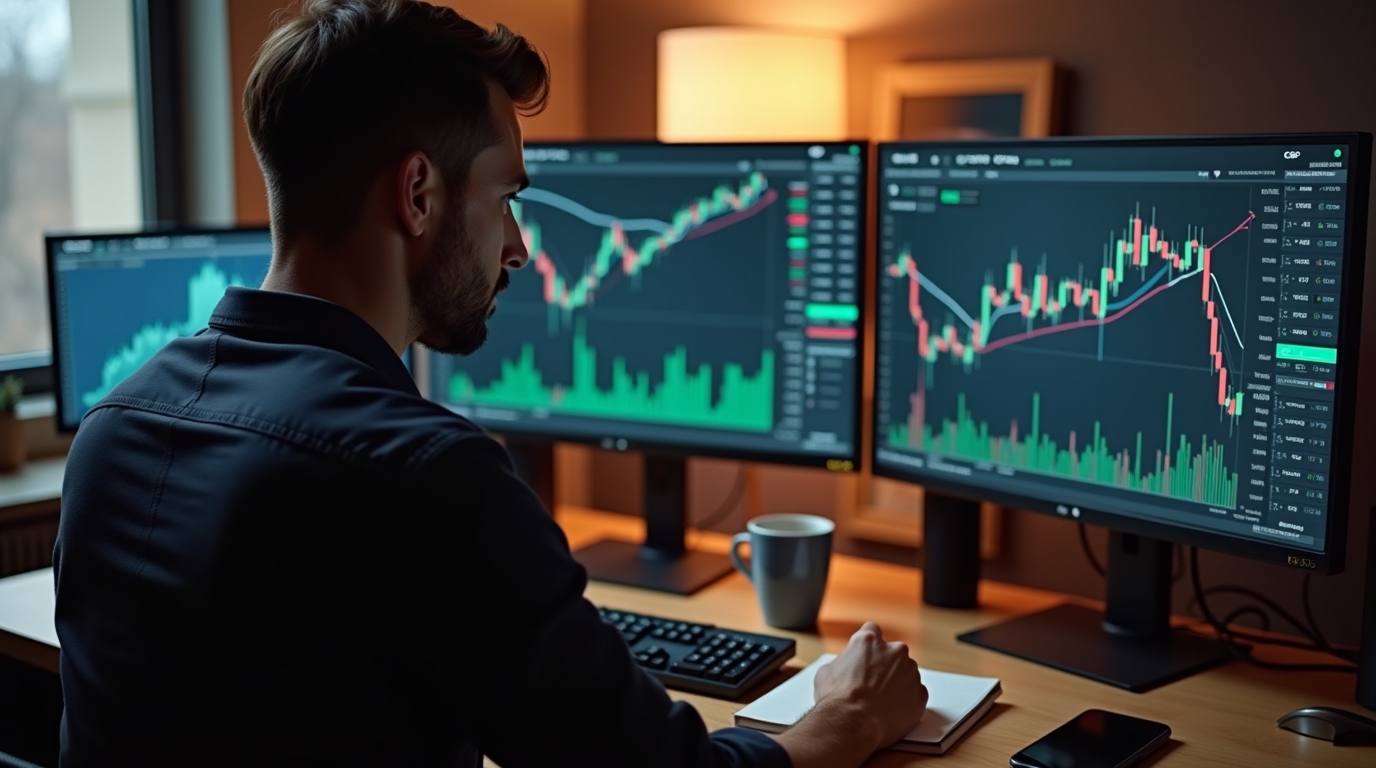
Manual trading requires constant focus, rapid visual calculation, and disciplined execution. For traders attempting to balance trading alongside full-time occupations, manual trading presents severe psychological and structural hurdles:
- Execution Hesitation & Fear of Missing Out (FOMO): Missing a prime breakout while in a meeting often leads traders to enter late at bad prices out of frustration.
- Interrupted Risk Management: Unplanned work tasks or personal emergencies prevent traders from manually locking in partial profits or trailing stops as setups evolve.
- Fatigue-Induced Errors: Analyzing late-night charts after a demanding day leads to poor decision-making, incorrect lot sizing, and skipped pre-trade checklists.
- Over-Trading on Lower Timeframes: Attempting to compensate for limited time by aggressively trading 1-minute or 5-minute noise during short break windows.
What Forex Automation Can (and Cannot) Do
To successfully integrate trading automation into a busy lifestyle, traders must maintain realistic expectations regarding algorithmic capabilities.
Automated software excels at executing explicit mathematical rules consistently at high speeds. It never gets tired, feels emotional hesitation, or forgets to place a stop loss. However, algorithms lack human intuition and cannot anticipate unexpected macroeconomic news events or shifting geopolitical landscapes unless configured with specific volatility safeguards.
| Operational Aspect | What Automation Handles Perfectly | What the Trader Must Control |
|---|---|---|
| Market Surveillance | Monitoring dozens of pairs 24/5 across multiple timeframes | Selecting core strategy parameters and asset pairs |
| Trade Execution | Instantly firing buy/sell orders upon indicator confluence | Deciding when to pause bots during high-impact news |
| Risk Protection | Calculating exact position size & attaching ATR stop losses | Setting global max-daily-loss thresholds on the account |
| Trade Management | Moving stops to breakeven & scaling out at profit targets | Periodically reviewing backtests and forward performance |
Essential Automation Modules for Busy Professionals
Busy traders do not need complex, hyper-frequency scalp algorithms that execute hundreds of trades a day. Instead, they need robust, structural automation modules designed to capture quality moves while protecting capital.
1. Session-Based Execution Filters
Forex volatility clusters around major regional session overlaps (such as the London/New York session overlap). Busy traders can program their algorithms to scan and execute trades exclusively during these liquid hours, turning off automated entry rules during dead Asian consolidation sessions.
2. Macro Trend Line Confirmation
To prevent bots from taking bad trades while the trader is away, strategies should incorporate higher-timeframe trend filters. For instance, requiring price to be strictly above the 200-period Simple Moving Average (SMA) on the 4-hour chart before approving any 15-minute long signals.
3. Dynamic ATR Risk Sizing & Trailing Stops
Fixed pip stop losses break down when volatility expands unexpectedly. Automating position sizing based on a fixed risk percentage (e.g., 1% account risk per trade) combined with Average True Range (ATR) stop placement ensures your position sizes auto-adjust to current market conditions without manual intervention.
Practical Blueprint: The “Set-and-Review” Swing Strategy
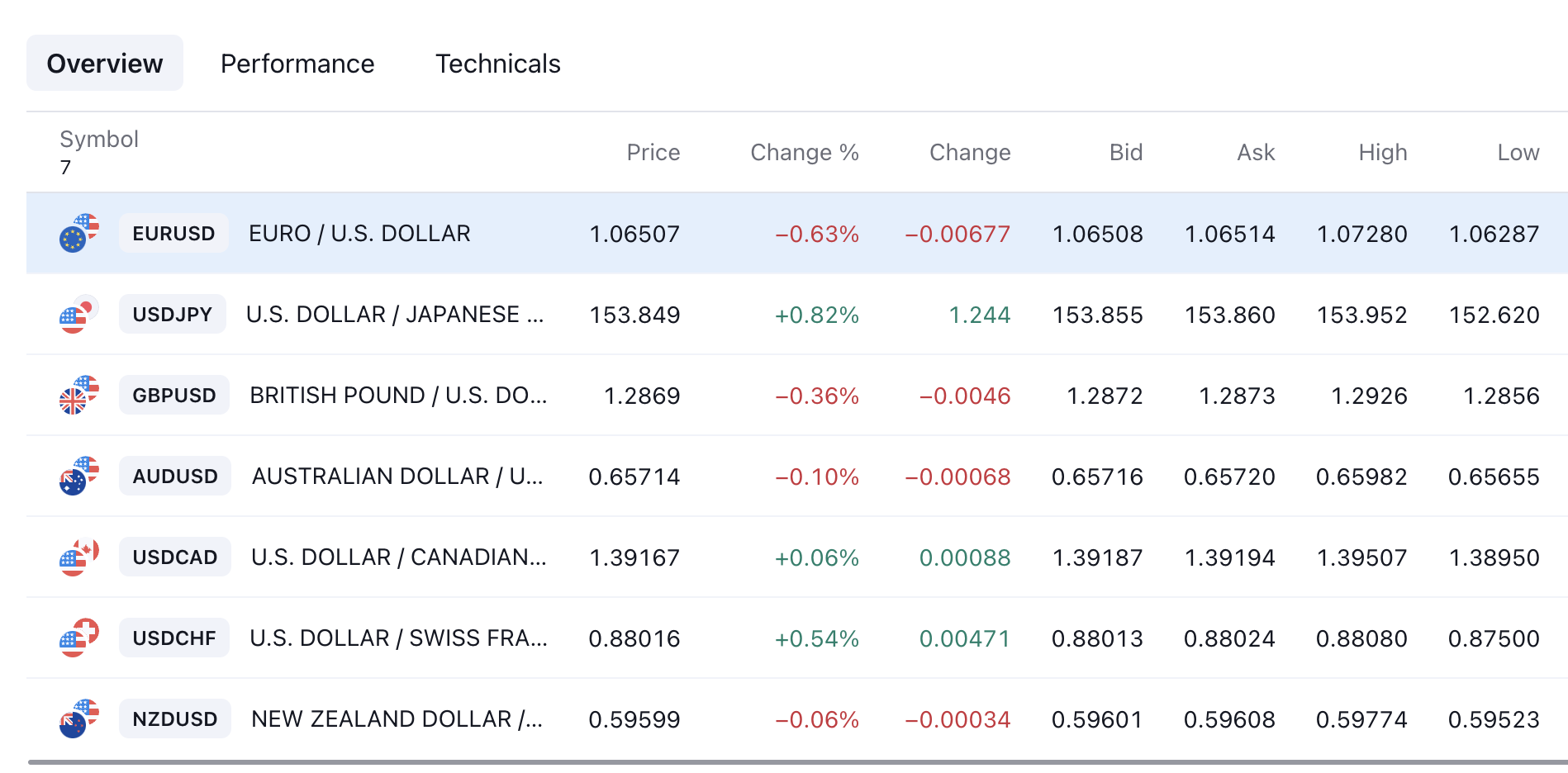
Consider an executive who wants to trade major forex pairs like EUR/USD and GBP/USD on a 1-hour timeframe without checking charts during working hours.
Instead of manually placing orders, the trader configures an automated, rule-based setup using AlgoBot:
- Market Filter: Strategy operates on GBP/USD 1-Hour chart between 08:00 UTC and 17:00 UTC (Active London & New York sessions).
- Trend Logic: Long entries are only permitted when 1-Hour price is above the 200 EMA and the 14-period RSI reads above 50.
- Entry Signal: A bullish MACD line crossover occurs while price retests the 20-period Exponential Moving Average.
- Automated Execution: AlgoBot evaluates criteria within milliseconds and routes the entry ticket to the broker via API.
- Automated Protection: Sizing is automatically set to 1% account equity. Stop loss is auto-placed 1.5 x ATR below entry, and a trailing stop activates once price reaches a 1:1 risk-to-reward milestone.
The busy trader spends 10 minutes every evening reviewing the automated trade log, tracking account equity growth, and confirming performance metrics—keeping complete oversight in a fraction of the time.
Common Mistakes Busy Traders Make with Automation
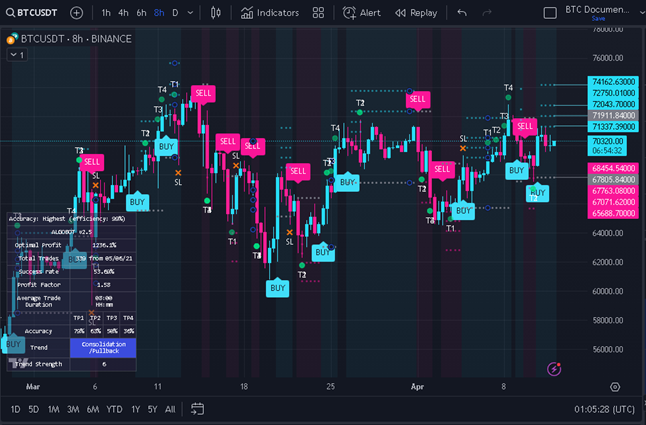
- “Set It and Forget It” Neglect: Leaving trading bots running indefinitely without monitoring performance, broker latency, or changing market regimes.
- Over-Leveraging Automated Accounts: Assuming that automated execution allows for higher leverage per trade, leading to severe drawdowns during bad market streaks.
- Running Bots Through High-Impact News: Failing to pause algorithms during major interest rate decisions, US Non-Farm Payrolls (NFP), or CPI inflation releases.
- Using Unchecked Third-Party “Black-Box” Bots: Deploying unknown automated systems without transparent risk parameters, backtest history, or customizable stop logic.
How AlgoBot Empowers Busy Traders
AlgoBot is built specifically to give disciplined traders their time back. Rather than requiring you to learn complex programming languages or construct fragile manual webhooks, AlgoBot provides an intuitive, pre-engineered automation infrastructure.
By connecting your strategy logic directly to MetaTrader, TradingView, or crypto broker APIs, AlgoBot acts as your disciplined 24/5 execution manager. It calculates dynamic position sizes, enforces strict risk limits, manages trailing stops, and routes trades instantly—allowing you to maintain a professional edge without sacrificing your career or personal life.
Final Thoughts
Forex automation for busy traders is not about finding a magic wealth push-button; it is about building a professional, structured workflow. Automation frees part-time traders from chart fatigue, emotional hesitation, and missed execution windows by handling market surveillance and trade management systematically.
By combining simple, robust strategy rules with strict risk parameters and automated execution platforms like AlgoBot, busy professionals can trade financial markets with institutional discipline and total peace of mind.
FAQs
Can I run forex automation while working a full-time job?
Yes. Forex automation is ideal for working professionals because the system continuously monitors charts, evaluates trade conditions, and executes orders with pre-set risk parameters automatically.
Does forex automation mean I never have to check my account?
No. Traders should regularly review performance logs, monitor overall risk exposure, and temporarily pause automated execution during major high-impact economic events.
How much capital do I need to start automating forex trades?
You can start with standard minimum broker deposits. The key requirement is utilizing automated position sizing rules to ensure every trade risks only 1% to 2% of your overall balance.
Educational content only. Trading involves risk, and past or historical performance does not guarantee future results.