
 Share
Share


A profitable trading bot does not start with code. It starts with a clear, objective trading idea. Before writing a single line of automation logic or configuring trading webhooks, a trader must define the exact parameters governing how their automated algorithm interacts with the market. Without concrete rules, an automated script simply executes human confusion at machine speed.
Automating forex markets requires breaking down complex discretionary decisions into deterministic mathematical conditions. Platforms like AlgoBot streamline this transition by turning structured technical ideas into execution workflows across multi-asset platforms, enabling systematic trading without emotional bias or execution delay.
To successfully build a forex trading bot strategy from scratch, traders must move beyond vague intuition and establish rigid operational frameworks covering currency selection, rule definition, risk parameters, backtesting, and live execution safeguards.
Key Takeaways
- Every automated strategy must begin with precise, rule-based logic rather than discretionary market assumptions.
- Core strategy parameters include market selection, timeframe alignment, technical entry/exit criteria, and active risk limits.
- Macro trend filters (e.g., 200 EMA) and volatility thresholds prevent trading bots from over-trading during chop or low-liquidity periods.
- Dynamic risk management tools like ATR-based stop losses protect account capital better than fixed-pip distances.
- Rigorous backtesting and demo execution are essential to validate strategy performance before deploying real capital with AlgoBot.
Defining the Trading Logic: Weak vs. Strong Rules
Automated algorithms cannot interpret vague statements or infer subjective market context. A bot requires explicit numeric thresholds to evaluate market state on every single price tick or candle close.
A weak trading rule relies on subjective interpretation, such as “buy EUR/USD when momentum looks strong.” To an algorithm, “strong momentum” is meaningless unless quantified by a technical indicator like the Relative Strength Index (RSI), moving average slope, or standard deviation expansion.
A strong trading rule translates market intent into precise mathematical conditions: “Execute a long market order on EUR/USD on the 1-hour chart if the 50 EMA is above the 200 EMA, price closes within 10 pips of the 20-period lower Bollinger Band, and the 14-period RSI is below 35.”

Core Elements of a Forex Bot Architecture
Building a complete forex trading bot requires configuring six interdependent modules. Omitting any single element exposes the trading account to structural drawdowns during unexpected market regimes.
1. Market and Timeframe Selection
Different forex currency pairs exhibit distinct volatility and liquidity profiles. Major pairs like EUR/USD and GBP/USD offer tight spreads and steady trend continuity, making them ideal for momentum algorithms. Exotic pairs carry wider spreads and frequent price gaps, requiring specialized risk controls.
Timeframe selection dictates the strategy’s trading frequency. Scalping bots targeting 5-minute charts execute frequent trades with higher sensitivity to spreads and slippage, whereas 4-hour swing trading bots emphasize macroeconomic trends with reduced transaction cost overhead.
2. Trend Filters and Invalidation Conditions
One of the most effective ways to upgrade a bot’s win rate is by implementing macro trend filters. A common rule is restricting long entries exclusively to periods when price trades above a higher-timeframe baseline, such as the 200-period Simple Moving Average (SMA).
In addition to trend filters, algorithms need explicit “no-trade zone” rules. Bots should automatically pause execution during critical economic news events, extreme spread widening, or low-volume weekend rollovers to avoid slippage.
3. Precise Entry Triggers
Entry triggers dictate the exact tick where an order enters the market. Common algorithmic triggers include technical indicator crossovers (e.g., MACD line crossing the signal line), structural price breaks (e.g., breaking resistance), or mean-reversion retests of moving average bands.
4. Automated Exit Logic and Dynamic Stop Loss
Exit rules determine how a bot locks in profits and caps losses. While fixed pip targets are simple, they fail to adapt to changing volatility. Incorporating an Average True Range (ATR) indicator allows the algorithm to widen stop distances during turbulent market conditions and tighten them during quiet consolidation.
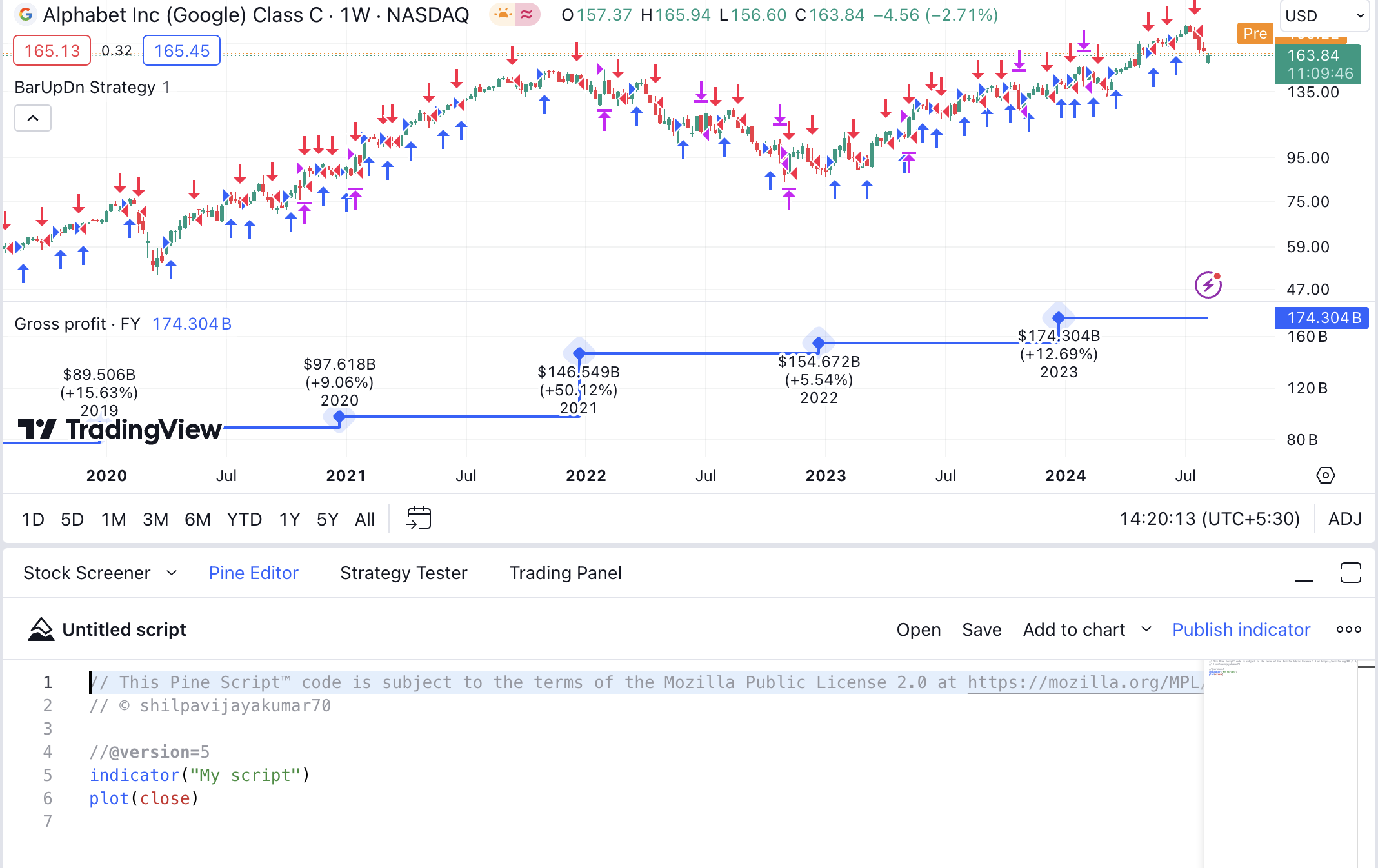
Comparing Systematic Strategy Frameworks
Selecting the right structural strategy type depends on market behavior and risk tolerance. The table below compares three foundational forex bot strategies:
| Strategy Type | Ideal Market Condition | Key Indicator/Filter | Primary Risk Factor |
|---|---|---|---|
| Trend Following | Strongly trending markets | 200 EMA + MACD Crossover | Whipsaws during side-ways chop |
| Mean Reversion | Range-bound consolidation | Bollinger Bands + RSI Extremes | Breakouts converting to run-away trends |
| Breakout Volatility | Consolidation squeezes | Donchian Channels + Volume/ATR | False breakouts (liquidity sweeps) |
Step-by-Step Strategy Development Workflow
Building a successful trading bot follows a linear process. Skipping steps—especially historical testing—is the primary cause of live trading failure.
- Hypothesis Generation: Formulate a simple rule-based concept based on historical price behavior.
- Rule Quantification: Convert concepts into strict mathematical parameters and entry/exit criteria.
- Backtesting: Run the trading rules against multi-year historical tick data to evaluate maximum drawdown, profit factor, and win rate.
- Optimization & Curve-Fit Checking: Fine-tune indicator settings while ensuring parameters are not over-fitted to past noise.
- Forward Paper Trading: Test execution in real-time demo conditions to measure slippage, latency, and spread impact.
- Live Deployment with AlgoBot: Connect the refined strategy to live exchange or broker APIs with automated risk management enabled.
Practical Blueprint: GBP/USD 1-Hour Trend-Pullback Bot
To see how these rules assemble in practice, consider an automated trend-pullback algorithm operating on the GBP/USD 1-Hour chart during active European and US trading sessions.
The algorithm scans the market continuously and executes trades based on four concurrent conditions:
- Trend Validation: Price must be trading above the 200 SMA on the 4-hour higher timeframe.
- Pullback Identification: The 14-period RSI on the 1-hour chart drops below 40, signaling a short-term dip in an overall uptrend.
- Execution Trigger: The 12-period EMA crosses above the 26-period EMA on the 1-hour chart while price sits within 1.5 ATR of the 50-period SMA.
- Automated Risk Controls: Order sizing is auto-calculated to risk exactly 1% of total account balance. The stop loss is placed 1.5 x ATR below the entry price, and a dual-tier take-profit order targets a 2:1 risk-to-reward ratio while locking in breakeven at 1:1.
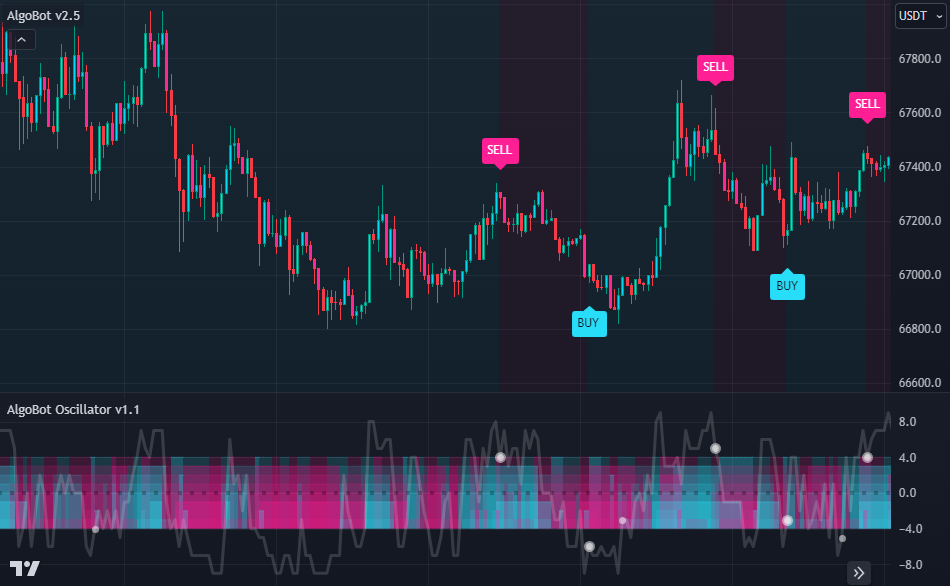
Common Bot Development Mistakes to Avoid
- Over-Complicating Rules: Adding dozens of indicators often leads to “analysis paralysis” for the bot, reducing trade frequency to statistically irrelevant levels.
- Ignoring Spread and Commission Costs: High-frequency bot strategies can look profitable in backtests until real-world transaction friction eats the edge.
- Curve-Fitting (Over-Optimization): Tweaking indicator parameters until historical performance looks artificially perfect guarantees failure in live forward testing.
- Omitting Capital Protection Protocols: Running algorithms without max-daily-loss kill switches leaves accounts vulnerable to flash crashes or API connectivity drops.
How AlgoBot Enhances Strategy Execution
AlgoBot streamlines the journey from trading concept to live deployment. Rather than spending months coding infrastructure from scratch or dealing with unstable custom webhooks, traders can deploy sophisticated strategy logic directly using AlgoBot’s pre-engineered automation engine.
By connecting custom rules to MetaTrader, TradingView, or crypto broker APIs, AlgoBot handles market data ingestion, trade evaluation, and sub-second order placement. Advanced features like dynamic position sizing, multi-tier profit targets, and cloud-based monitoring ensure your strategy runs with institutional discipline 24/7.
Final Thoughts
Building a forex trading bot strategy from scratch is an exercise in structural discipline. An automated bot is only as effective as the rules governing its code. By defining clear entry conditions, filtering out range-bound noise, and locking down dynamic risk controls, traders transform chaotic market movements into repeatable execution systems.
For traders ready to transition from manual guessing to systematic execution, tools like AlgoBot provide the operational backbone needed to test, launch, and scale automated strategies effortlessly.
FAQs
Do I need coding skills to build a forex trading bot?
No. Platforms like AlgoBot allow you to build, test, and deploy automated forex strategies using modular logic rules and webhooks without writing custom software code.
What is the best forex pair to run a trading bot on?
Major currency pairs like EUR/USD and GBP/USD are ideal for trading bots due to high liquidity, low bid-ask spreads, and reliable trend consistency.
How do I stop my trading bot from trading during news crashes?
You can add macroeconomic news filters or volatility limits (like ATR thresholds) to automatically disable trade execution during high-impact economic releases.
Educational content only. Trading involves risk, and past or historical performance does not guarantee future results.