

 Share
Share


Cornix is an automated crypto execution tool designed to connect signal channels—such as Telegram groups and TradingView alerts—directly to crypto exchange trading accounts. Crypto markets operate continuously 24/7, making manual order placement, multi-target take-profit tracking, and trailing stop updates difficult to maintain manually without experiencing execution delays.
Platforms like AlgoBot complement tools like Cornix by providing structured, high-probability signal inputs alongside advanced risk controls. Understanding how Cornix processes signal text syntax, routes API commands, and manages position entries enables traders to automate their crypto setups while maintaining strict account safety rules.
By establishing a clear bridge between signal providers and exchange order books, traders can execute disciplined trade plans automatically. Establishing explicit position sizing controls, stop-loss limits, and leverage boundaries ensures that automated signal execution protects capital across volatile market cycles.
Key Takeaways
- Cornix automates signal execution by converting Telegram text posts or TradingView webhooks directly into live exchange orders.
- Exchange API connectivity allows Cornix to execute scaled entries, trailing stops, and multi-tier take-profit targets automatically.
- Automation eliminates execution latency and emotional interference, which is particularly vital in fast-moving 24/7 crypto markets.
- Configuring strict API permissions, disabling withdrawal access, and setting leverage limits inside Cornix are critical safety requirements.
- AlgoBot combines high-accuracy signal generation with automated risk management, offering a disciplined foundation for crypto trade execution.
What Is Cornix?
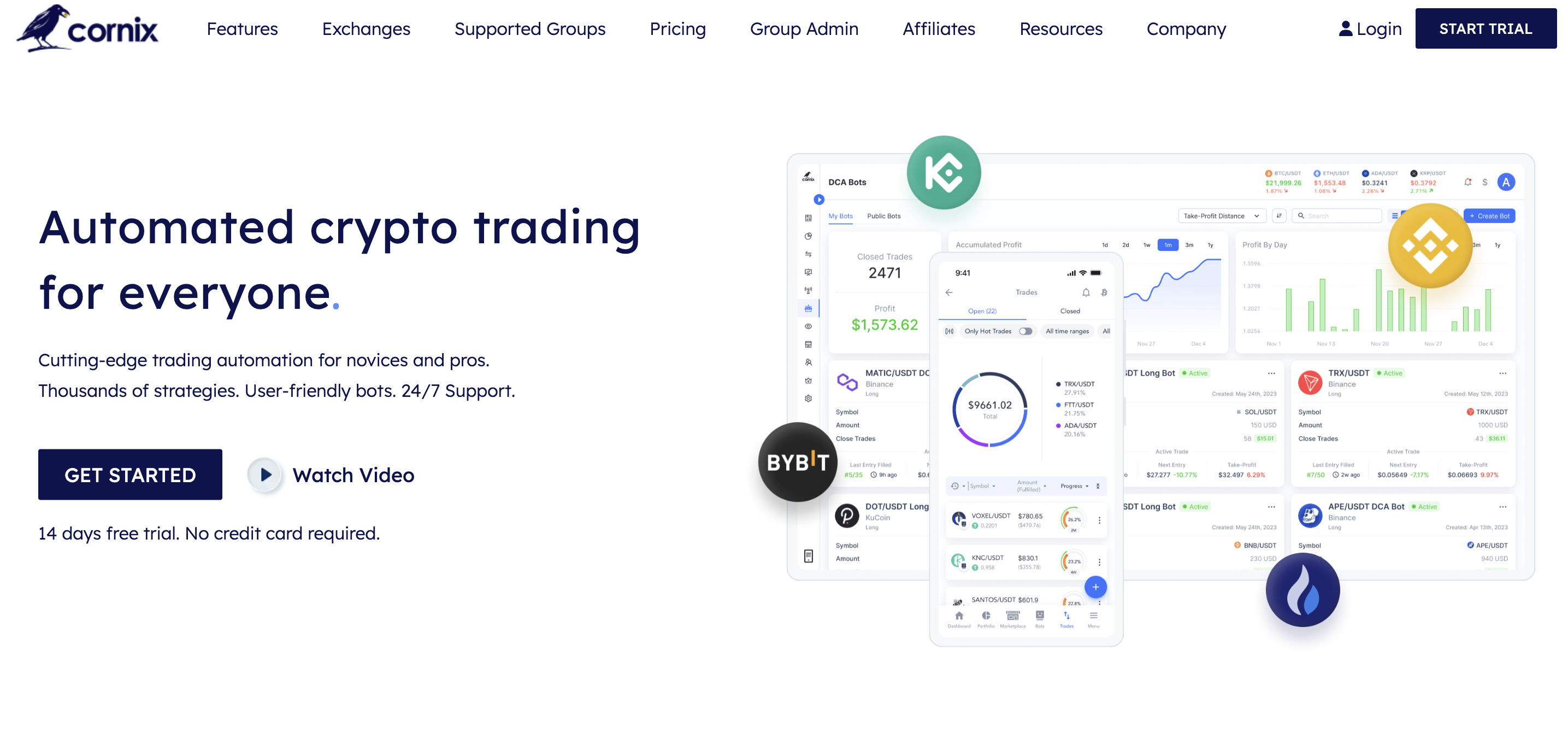
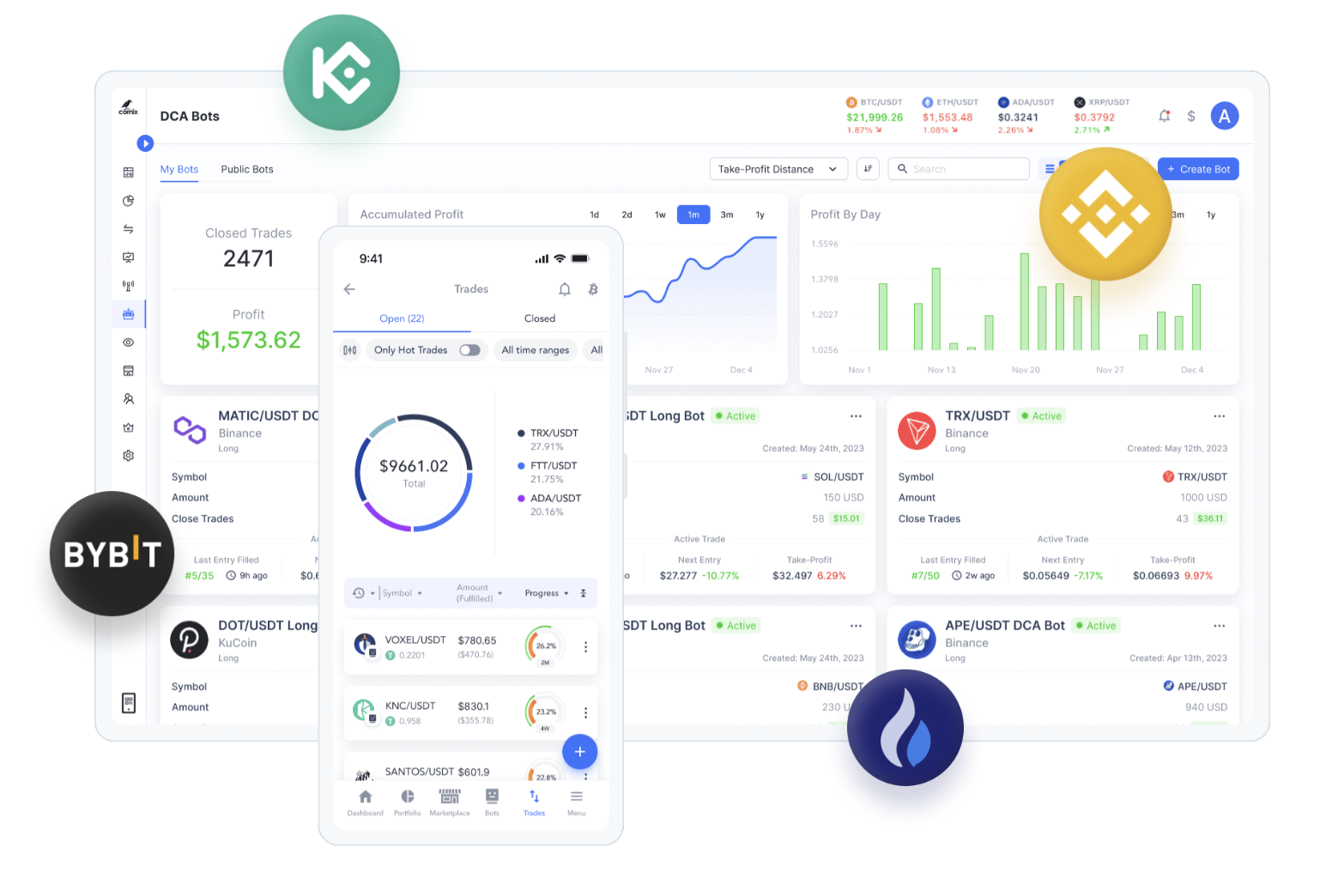
Cornix is a crypto trading automation tool often used to connect signals with exchange execution. It can help traders manage entries, take profits, stop losses, and position management from structured signal messages.
By automatically translating channel or alert signals into active exchange orders, it bridges the gap between signal generation and real-time execution. This allows users to follow multi-target strategies and complex trailing exits without needing to manage orders manually on exchange interfaces.
For a practical trader, the question is not only whether the idea sounds attractive. The question is whether it can be turned into repeatable rules. A repeatable rule should explain when a setup is valid, when it is invalid, how much is at risk, and what should happen if market conditions change.
Why Crypto Traders Use Cornix
Crypto markets run 24/7, so traders often miss setups or exits if everything is manual. A tool like Cornix can help apply a signal consistently even when the trader is not watching the chart.
Because digital asset volatility can trigger entry conditions at any hour, automated parsing ensures rapid execution without emotional hesitation. It frees traders from round-the-clock chart monitoring while maintaining strict adherence to trade plans.
Additionally, manual management of multi-target trades on exchange terminals can be prone to human error during rapid price swings. Automating order distribution ensures that entries, trailing stop-losses, and profit steps are posted precisely as defined in the signal configuration.
How Signal Automation Works
A signal typically includes the coin, direction, entry area, stop loss, and take-profit targets. Cornix can read supported signal formats and create orders on connected exchanges, depending on user settings.
The software connects via exchange API keys, parsing incoming text or alert syntax to place scaled limit entries and multi-tiered take-profit orders instantly. This structured execution ensures that position management follows exact percentage allocations without human error.
Once an entry order triggers on the exchange, Cornix automatically generates dependent conditional orders, such as stop-losses and profit-taking ladder levels. As price reaches each take-profit target, the bot can adjust trailing stop-losses to breakeven or lock in gains according to preset rules.
Risk Controls to Review
Users should check maximum position size, leverage settings, stop-loss behaviour, exchange permissions, and whether the bot is allowed to open new trades automatically. Conservative permissions are safer than giving more access than required.
When configuring exchange API keys, disabling withdrawal permissions and restricting leverage limits provides an essential security layer. Additionally, setting global account drawdown limits prevents multiple failing signals from compounding losses during sudden market crashes.
Traders must also determine default position sizing models, choosing between fixed dollar amounts, percentage of balance, or risk-based sizing. Establishing account-level safeguards inside Cornix prevents individual rogue signals from over-leveraging total capital.
Manual vs Automatic Confirmation
Some users prefer the bot to prepare a trade and wait for confirmation. Others want full automation. Beginners often benefit from semi-automation first because it allows them to learn the structure of signals before removing every manual step.
Semi-automated approval gives traders a chance to review market context and risk-to-reward ratios before placing capital on the line. Once confidence in signal reliability and platform execution grows, moving toward full hands-free automation becomes a natural next step.
Furthermore, manual confirmation buttons inside Telegram notifications allow traders to reject signals during major macroeconomic news events or illiquid market weekend conditions. This hybrid approach retains human discretion while benefiting from automated order entry once approved.
AlgoBot and Crypto Automation
AlgoBot’s crypto automation positioning overlaps with this need: structured signal discovery, execution support, and risk-aware automation. The important point is that automation should make rules easier to follow, not encourage oversized trades.
Combining systematic signal generation with disciplined execution pathways ensures that trading decisions remain strictly logic-driven. Emphasizing capital protection and structured position sizing allows traders to navigate volatile crypto market conditions far more consistently.
By pairing AlgoBot’s high-accuracy algorithmic signal feeds with automated execution bridges like Cornix, traders achieve a robust, end-to-end trading system. AlgoBot delivers validated setup triggers, while the execution layer ensures orders are routed seamlessly to exchange order books.
Practical Example
Consider a trader monitoring Bitcoin (BTC/USDT) and Ethereum (ETH/USDT) while working full-time. The trader subscribes to a signal service that posts detailed trade setups to a private Telegram channel whenever market consolidation breaks out on high volume.
When a signal posts: “BUY BTC/USDT Entry: 64,000 – 64,500 | TP1: 66,000 | TP2: 68,000 | SL: 62,500”, Cornix parses the message text instantly. It verifies the syntax, validates account risk parameters (e.g., 2% balance risk), and generates two scaled entry limit orders on Binance via API.
As market price moves into the entry zone, the orders execute instantly. Cornix immediately places the stop-loss order at 62,500 and creates laddered sell limit orders at TP1 and TP2. When TP1 is hit, the bot automatically moves the stop-loss to entry price, securing a risk-free position automatically.
Common Mistakes Beginners Make
- Over-leveraging trades by setting high default leverage settings without accounting for crypto volatility wicks.
- Failing to test signal parsing and order routing in a paper trading or demo account before connecting live API keys.
- Enabling automated trading for multiple unverified signal channels simultaneously, leading to conflicting position setups.
- Neglecting to set hard account-level stop-loss overrides inside Cornix to protect against unmanaged channel drawdowns.
- Granting unnecessary API key permissions (such as withdrawal rights) when linking exchange accounts to third-party tools.
How AlgoBot Can Fit Into the Workflow
AlgoBot serves as an advanced signal discovery engine that fits seamlessly into the Cornix execution ecosystem. By generating institutional-grade, algorithmic crypto signals based on quantitative momentum and trend analysis, AlgoBot provides the high-quality setups needed for automated execution.
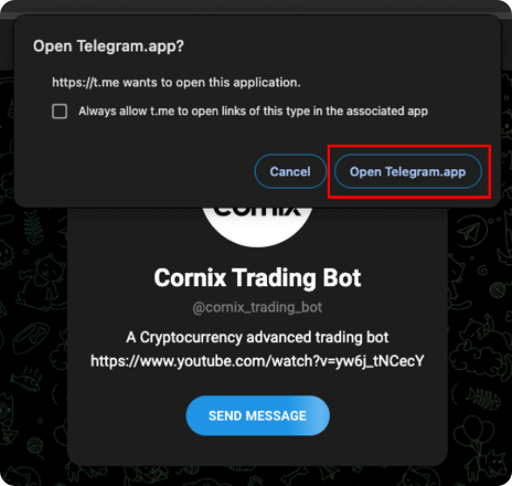
Traders can direct AlgoBot’s automated signal outputs directly into custom Telegram channels or TradingView webhooks connected to Cornix. This setup guarantees that every executed trade originates from a backtested, rule-based strategy rather than subjective manual opinions.
Furthermore, AlgoBot provides detailed risk templates that map directly to Cornix configuration fields. By aligning signal generation with risk parameters—such as fixed percentage risk per trade, trailing stop thresholds, and conservative leverage—traders establish a scalable, disciplined crypto trading workflow.
Final Thoughts
Cornix Trading Bot Guide for Crypto Traders is ultimately about structure. Traders do not need more random opinions; they need clear rules, consistent execution, and risk limits that protect them during bad conditions. Automation can help with that, especially when it is paired with education and realistic expectations.
For users comparing trading tools, the strongest platform is usually the one that makes disciplined behaviour easier: clear signals, sensible risk controls, transparent setup steps, and the ability to pause or adjust when conditions change. That is the standard beginners should use when evaluating AlgoBot or any other automated trading solution.
FAQs
Is Cornix only for crypto?
Cornix is primarily associated with crypto exchange signal automation.
Can Cornix guarantee signal quality?
No. It executes or manages signals; the quality still depends on the strategy behind them.
Should beginners use leverage?
Beginners should be very cautious with leverage because it can magnify losses quickly.
Educational content only. Trading involves risk, and past or historical performance does not guarantee future results.