
 Share
Share


Automated trading software can execute strategies with incredible discipline and speed, but without strict risk management rules, it can also execute losing trades just as quickly. The primary goal of trading automation is not to eliminate market risk entirely, but to control capital exposure through pre-defined rules that prevent catastrophic drawdowns.
Platforms like AlgoBot provide built-in risk settings, dynamic position sizing, and protective stop loss controls that give traders a structured framework for managing risk across forex, crypto, and other markets. This guide details the essential risk management controls needed to protect your account when deploying trading algorithms.
Key Takeaways
- Automated risk controls protect your trading capital from compounding losses, high market volatility, and unexpected flash crashes.
- Position sizing should automatically adapt to account equity and stop loss distance to maintain a consistent monetary risk per trade.
- Daily and weekly account drawdown limits act as circuit breakers, pausing automated execution when market conditions become unfavorable.
- Monitoring correlations across open assets prevents accidental overexposure to a single currency or market movement.
- AlgoBot provides customizable risk presets—such as conservative and balanced profiles—to align bot execution with individual risk tolerance.
Why Risk Management Matters More Than Automation
Automation can make trading more consistent, but it can also make mistakes faster. A bot without risk management can open repeated trades, oversize positions, or continue trading during poor conditions.
While an algorithm executes strategy logic with flawless speed, it lacks inherent contextual awareness. If market volatility spikes unexpectedly or liquidity thins out, an unconstrained bot will systematically execute losing setups repeatedly, accelerating drawdown faster than a manual trader ever could.
Risk management acts as the primary safety governor in automated trading. By placing hard mathematical constraints on order sizing, loss limits, and execution permissions, traders ensure that systematic errors or adverse market regimes do not destroy account capital.
Set Maximum Risk Per Trade
Every automated setup should define how much account equity can be lost if the stop loss is hit. Many conservative traders risk a small fixed percentage rather than changing size emotionally.
Dynamic position sizing algorithms calculate lot or contract size automatically based on account equity and stop-loss distance. For instance, risking a strict 1% per trade means that a wide stop loss results in a smaller lot size, while a tighter stop loss expands position volume without altering monetary risk.
This systematic sizing model removes emotional variance and protects against compounding loss sequences. By keeping trade exposure proportionate to real-time balance, the system preserves capital during extended losing streaks and naturally scales sizing up as account equity grows.
Use Stop Losses and Invalidation
A stop loss defines where the trade idea is wrong. Bots should not be allowed to hold losing trades indefinitely just because the user hopes for a reversal.
In automated trading, a hard stop loss serves as a non-negotiable structural invalidation boundary. Algorithms must assign fixed or ATR-based stop prices simultaneously with market entry to guarantee that every position has a predetermined, bounded downside limit.
Allowing a bot to trade without hard stops—or relying on dangerous averaging-down strategies like Martingale—exposes the account to catastrophic tail-risk. Proper exit logic closes trades immediately when conditions fail, preserving capital for higher-probability opportunities.
Control Daily and Weekly Drawdown
A good system should have a point where it stops trading after losses. Daily or weekly drawdown limits prevent a bad session from becoming account-damaging.
Equity-curve protection rules act as automated circuit breakers. If cumulative losses reach a pre-configured threshold within a single trading day or week (e.g., 3% daily drawdown), the platform automatically halts execution and cancels pending orders.
This automated pause prevents the strategy from executing trades during abnormal market regimes or structural trend shifts. It gives the trader time to audit performance logs and assess strategy health before re-engaging live capital.
Avoid Overlapping Exposure
If a bot opens EUR/USD, GBP/USD, and AUD/USD in the same direction, the account may be more exposed to dollar movement than it appears. Risk controls should consider correlation.
Many currency pairs and crypto assets share high statistical correlation driven by macro factors like US Dollar strength or overall crypto market sentiment. Running multiple automated setups simultaneously on correlated pairs can unintentionally double or triple true directional risk.
Advanced automated risk frameworks incorporate cross-asset correlation rules to restrict total portfolio exposure. By capping open positions across linked assets, the system prevents concentrated drawdowns when a single macro narrative drives the market.
Monitor the Bot
Automation does not mean abandonment. Users should check logs, open trades, broker connection, and performance reports. A bot should be easy to pause when conditions change.
Continuous system oversight is essential to catch operational friction, such as broker API latency, platform disconnects, or unexpected slippage. Regular performance reviews ensure that live execution statistics continue to match historical backtest parameters.
Furthermore, manual intervention features like a “kill switch” or pause button allow traders to temporarily halt algorithmic execution during major unscheduled news events, illiquid holiday trading sessions, or platform maintenance windows.
Practical Example
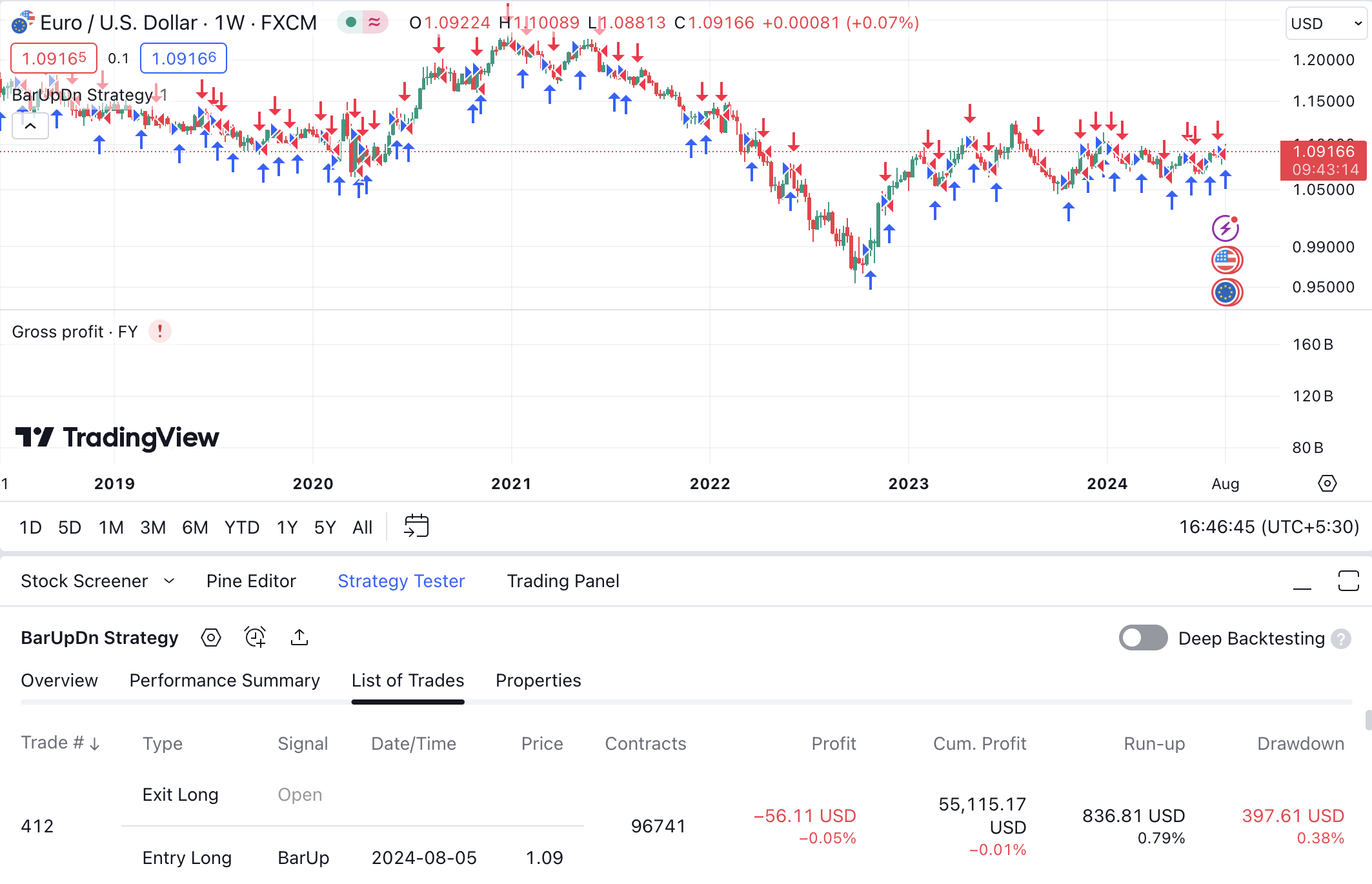
Consider an automated strategy configured to risk no more than 1% of equity per trade with a strict daily max drawdown limit of 3%. The bot initiates a long position on EUR/USD, placing a hard stop loss 25 pips below entry based on recent technical swing lows.
During a period of sudden news-driven volatility, the initial trade hits its stop loss, resulting in an exact 1% equity loss. If market conditions remain erratic and two additional trades trigger stop losses in quick succession, the 3% daily drawdown threshold is reached. The platform automatically pauses further automated order execution for the remainder of the session, locking in protection against revenge trading or cascading losses.
Common Mistakes Beginners Make
- Deploying aggressive leverage settings or unconstrained position sizes that risk a significant portion of account equity on a single setup.
- Removing or widening hard stop losses mid-trade in the hope that a losing market position will eventually recover.
- Running multiple trading algorithms across highly correlated currency pairs or crypto assets, unknowingly tripling directional market risk.
- Failing to set up daily or weekly account drawdown limits to automatically halt execution during adverse market regimes.
- Treating automated trading tools as hands-off passive systems rather than actively monitoring execution logs and system connectivity.
How AlgoBot Can Fit Into the Workflow
AlgoBot places risk control at the heart of the automated trading process by integrating dynamic position sizing, trailing stop logic, and account-level drawdown filters into its workflow. Traders can select pre-calibrated risk profiles—ranging from conservative to aggressive—to ensure automated order execution strictly adheres to their personal risk parameters.
By providing real-time trade monitoring, transparent execution logs, and instant override capabilities, AlgoBot enables users to maintain full control over their market exposure. This structured risk framework allows traders to deploy automated signals and execution strategies with disciplined capital protection built in from day one.
Final Thoughts
Risk Management for Automated Trading Bots is ultimately about structure. Traders do not need more random opinions; they need clear rules, consistent execution, and risk limits that protect them during bad conditions. Automation can help with that, especially when it is paired with education and realistic expectations.
For users comparing trading tools, the strongest platform is usually the one that makes disciplined behaviour easier: clear signals, sensible risk controls, transparent setup steps, and the ability to pause or adjust when conditions change. That is the standard beginners should use when evaluating AlgoBot or any other automated trading solution.
FAQs
What is the biggest risk with trading bots?
The biggest risk is allowing a system to trade too large or too often without proper loss limits.
Should every bot use a stop loss?
For most retail trading strategies, yes. Undefined downside is dangerous.
Can conservative settings still lose money?
Yes. Conservative settings reduce risk but do not remove it.
Educational content only. Trading involves risk, and past or historical performance does not guarantee future results.