

 Share
Share



USD/ZAR Exchange Rate Overview
Understanding USD/ZAR matters for traders and investors worldwide. In global forex, this pair signals emerging market health and risk appetite. Because volatility can be high, traders watch macro data, yields, and domestic factors closely. Therefore, staying informed helps manage risk and spot rand recovery or selling pressure early.
Key factors affecting USD/ZAR:
- US dollar strength and US economic data, because stronger data supports the dollar and higher Treasury yields.
- South African domestic issues such as power supply stability and fiscal discipline, which affect risk sentiment and ZAR demand.
- Commodity prices and gold moves, as a gold pullback reduced short-term ZAR support.
- Technical levels and indicators including the 18.70 resistance, 18.80 failure point, 18.40 support, and the 18.00–17.80 zone.
- Market sentiment for emerging markets, liquidity flows, and short-term momentum measures like RSI and moving averages.
This introduction previews a technical, cautious outlook with a neutral-to-bearish bias. Moreover, the article will explain key levels, trading signals, risk thresholds, and scenario-based guidance for USD/ZAR traders.
Economic Factors Affecting USD/ZAR
The US economy drives USD/ZAR through interest rates, yields and growth. Because stronger US data lifts Treasury yields, the dollar often strengthens. For example, hotter jobs reports push yields higher, and traders move into dollar assets. As a result, the rand tends to weaken against the USD.
South African economic health also matters. Domestic growth, inflation and trade balances shape supply and demand for ZAR. Moreover, commodity prices and gold moves influence rand demand. A gold pullback, for instance, reduced short-term ZAR support in recent weeks.
Political Influences on USD/ZAR
Political risk affects currency exchange and forex trading flows. Policy uncertainty, fiscal discipline and election noise can drive market volatility. For example, renewed concerns about power supply or higher fiscal deficits can trigger capital outflows and rand selling pressure. Therefore, investors watch reforms and government stability closely.
Market and Technical Drivers for USD/ZAR
Technical signals guide short-term traders. The pair has key levels to monitor: 18.70 resistance, 18.80 failure point, 18.40 support, and 18.00–17.80 zone. Also watch indicators like the 15-day moving average (18.08), 20-day MA (18.09) and RSI near 70.61. Liquidity, risk sentiment for emerging markets and flows into gold affect moves. For live quotes and deeper weekly levels, see our forex alerts: forex alerts and refer to real-time data at Investing.com.
Traders should set scenario plans and stops. A close below 18.40 could shift attention lower. However, failure to close above 18.80 may confirm the broader downtrend.
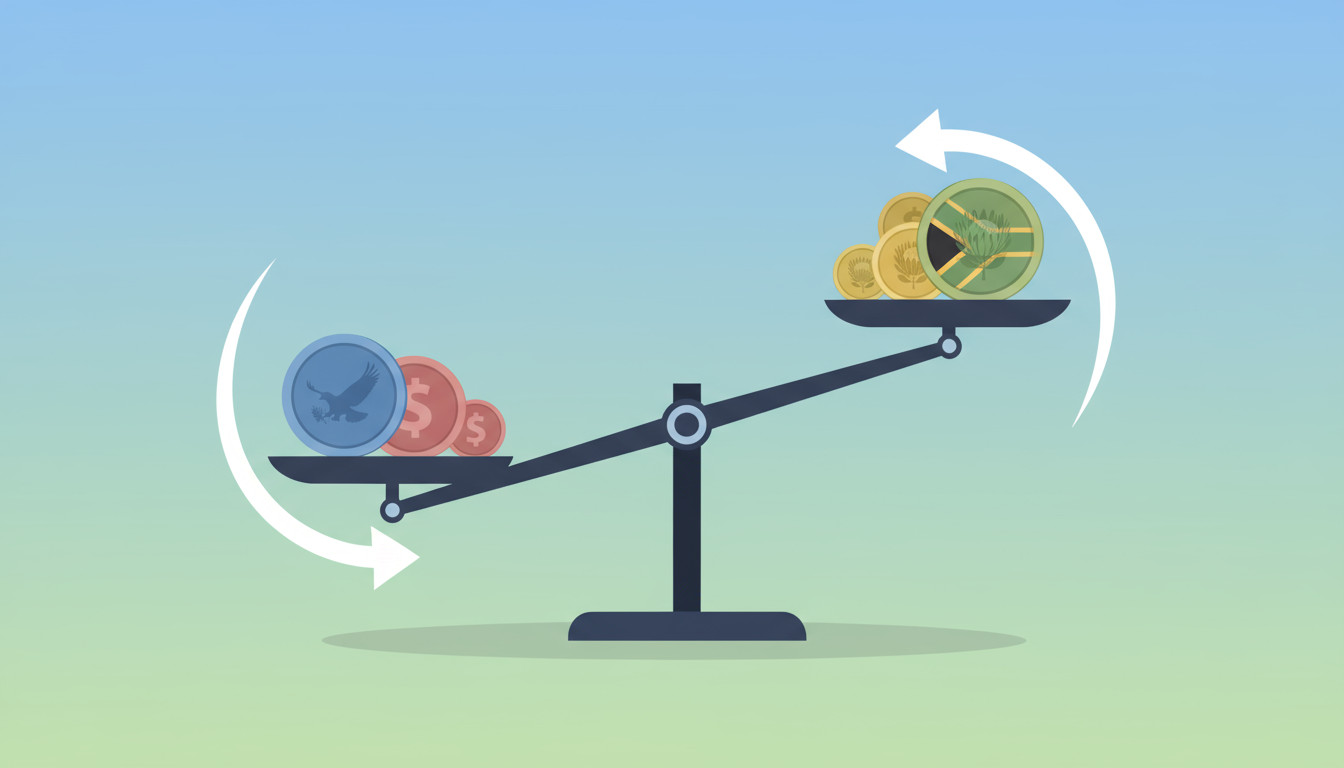
The table below summarizes recent USD/ZAR trends and yearly ranges.
It highlights highest, lowest, and average exchange rates per year. Use these figures to spot volatility and long term shifts. For precise historical data consult Investing.com.
| Year | Highest Rate | Lowest Rate | Average Rate |
|---|---|---|---|
| 2021 | 16.96 | 13.70 | 15.30 |
| 2022 | 19.05 | 14.01 | 16.80 |
| 2023 | 19.95 | 16.50 | 18.10 |
| 2024 | 19.20 | 15.90 | 17.60 |
| 2025 | 18.72 | 17.80 | 18.35 |
Note: Figures illustrate annual extremes and averages. For exact historical series and intraday details, see the source: Investing.com.
How Traders Use USD/ZAR Rate Information
Traders use USD/ZAR data to shape strategies and manage risk. Because the pair reflects both US and South African dynamics, it offers timely trading signals. Short-term moves often tie to yields, commodity swings and domestic news.
Analysis Techniques for USD/ZAR
Combine technical and fundamental analysis for clear setups. Use moving averages, RSI and the key levels of 18.70 and 18.40. Also watch US payrolls, Treasury yields and gold for broader context.
- Technical signals: trade pullbacks to resistance or support, because these offer defined entries and exits.
- Fundamental checks: confirm technical setups with macro prints and commodity moves to reduce false signals.
- Tools: check live charts on TradingView. For real-time quotes use Investing.com.
Risk Management and Execution
Control position size and place stops beyond key levels. Use scenario planning to outline outcomes for closes above 18.80 or below 18.40. Moreover, hedge large exposures when risk sentiment turns negative.
- Set stop loss and take profit levels before entering trades.
- Scale in or out to manage volatility and avoid emotional exits.
Decision-making Benefits
Using USD/ZAR trends improves timing and capital protection. For weekly level alerts and practical trading thresholds see our forex alerts: forex alerts. Therefore, traders can act on defined scenarios rather than guesswork.
Conclusion
USD/ZAR remains a key gauge for risk and emerging market health. Overall bias is neutral to bearish because the pair shows lower highs and lower lows. Key technical levels matter for traders: 18.70 resistance and 18.40 support. Macro drivers include US data, elevated Treasury yields and commodity moves.
AlgoBot is a Dubai-based provider of trading tools and services. It specializes in forex and crypto markets and serves both traders and investors. It offers Premium TradingView indicators, crypto and forex signals and copy trading services. Moreover it backs these services with real time alerts and practical trade setups.
AlgoBot acts as a 24/7 emotion free trading partner. Therefore it helps maximize returns while minimizing uncontrolled risk. Follow us on social media X: @AlgoBotTrading TikTok: @algobottrading Instagram: @algobottrading.
Frequently Asked Questions (FAQs)
What main factors move the USD/ZAR exchange rate?
The USD/ZAR moves on US macro data, Treasury yields, and South African fundamentals. Because stronger US data raises yields, the dollar often gains. Conversely, domestic shocks like power outages reduce rand demand and increase volatility. Commodity prices and gold also matter, since South Africa links to commodity cycles.
How can I use technical levels to trade USD/ZAR?
Watch key levels such as 18.70 resistance and 18.40 support. Use moving averages and RSI to confirm momentum. Combine chart signals with macro checks. For live charts see TradingView.
What risk management steps work best for USD/ZAR trades?
Size positions relative to account risk and set stop loss beyond technical levels. Additionally, scale entries and exits to manage spikes. Hedge larger exposures when risk sentiment worsens. Always define scenarios for closes above 18.80 or below 18.40.
How does AlgoBot help with USD/ZAR trading?
AlgoBot is an AI powered platform from Dubai. It provides Premium TradingView indicators, crypto and forex signals, copy trading and AI driven tools. Therefore it automates strategy execution, removes emotional bias and runs 24/7 to capture moves and manage risk.
Where can I check real time USD/ZAR data and alerts?
For quotes and historical context use Investing.com. For actionable weekly levels and alerts, join AlgoBot’s forex alerts and signals. These tools help traders act on defined setups rather than guesswork.