

 Share
Share



In today’s connected world, US-China tensions strongly influence currency values and trader decisions worldwide.
The ongoing trade war creates uncertainty that drives rapid changes in forex markets. Traders rely heavily on timely forex alerts to navigate this volatile environment. Geopolitical risks and market speculation combine to create a challenging landscape where quick, informed actions are essential. This article explores how these tensions shape forex markets and why staying alert is crucial for traders now.
Recent Developments in the US-China Trade War
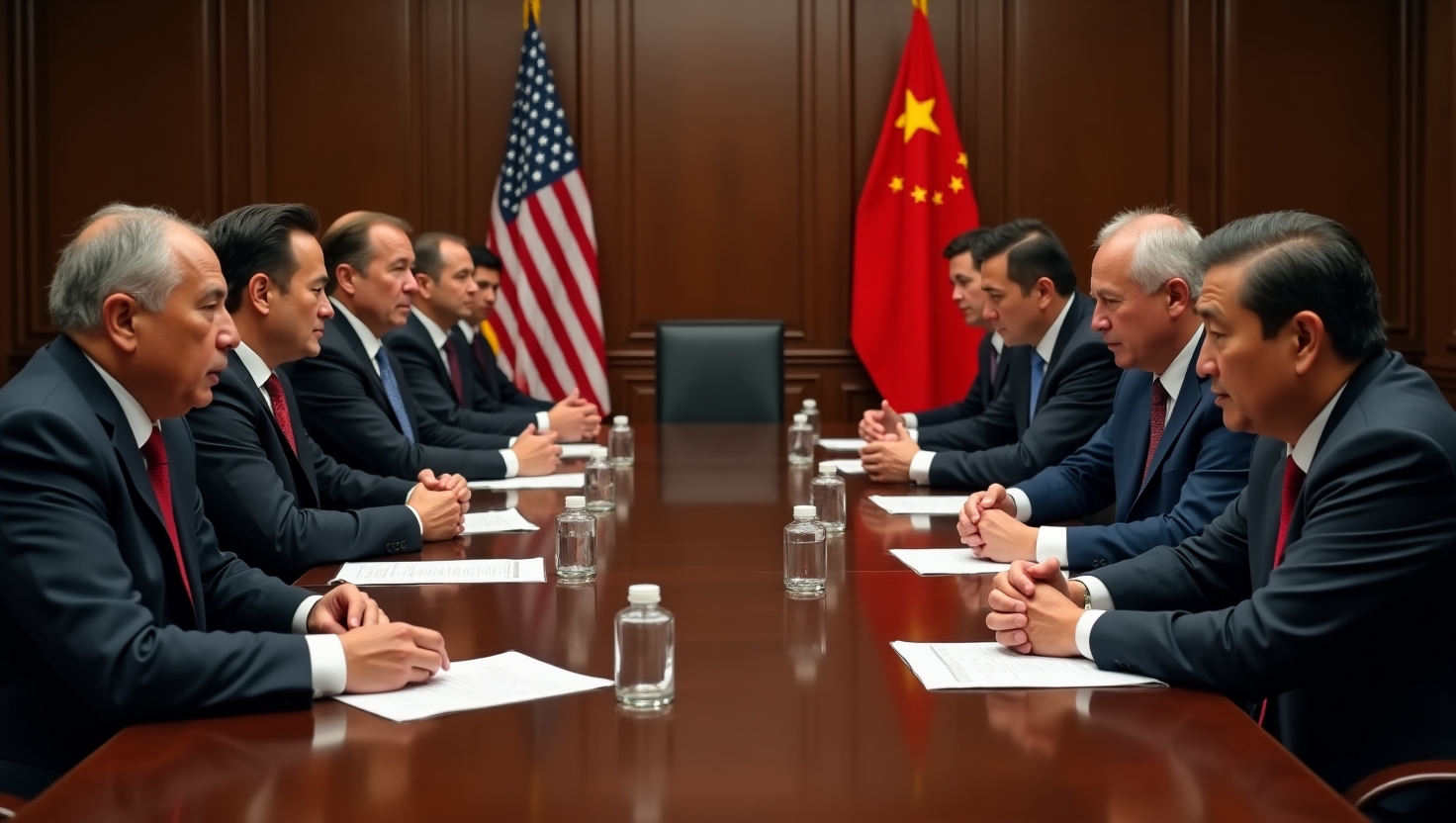
The US-China trade war has seen renewed tensions with key escalations from both sides in recent days. These developments carry significant implications for global trade, forex markets, and economic growth.
President Trump’s Tariff Threats
- President Trump escalated the trade conflict by threatening to impose “massive tariffs” on China in response to what the US described as “hostile” moves by China.
- His statements have rattled global markets, contributing to a sharp fall in stock prices as investors fear increased costs and disruption in supply chains.
- Trump’s remarks followed a weekend of conciliatory signals earlier this month but marked a hardening stance that signals prolonged trade friction.
China’s Rare-Earth Export Curbs
- In a strategic countermove, China imposed restrictions on exports of rare-earth minerals, vital components used in high-tech and defense industries worldwide.
- This move raised concerns about supply disruptions, given China’s dominant position in the rare-earth market.
- The export curbs are seen as part of China’s broader strategy to respond to US trade pressures by leveraging critical resources.
Market Implications and Expert Views
- According to Scotiabank’s Chief FX Strategist, these developments have triggered a rally in the US Dollar and increased volatility in global markets. More details can be found on Bloomberg Forex.
- The tightened trade measures are expected to present more headwinds for global economic growth, with sectors linked to international trade feeling immediate impacts.
- The weakening risk sentiment has also influenced commodity markets, with prices like copper experiencing declines due to lowered growth expectations.
Summary of Key Points
- President Trump threatened “massive tariffs” escalating trade tensions.
- China responded with curbs on rare-earth mineral exports.
- Market reactions include stock sell-offs and a stronger US Dollar.
- Analysts warn of broader impact on global growth and trade.
These recent developments underscore the fragile nature of US-China relations and highlight the potential for ongoing volatility in forex and financial markets. Traders and investors must stay vigilant as both sides continue to negotiate and counter each other’s economic measures.
| Currency Pair | Recent Movement | Key Drivers | Relevant News Source |
|---|---|---|---|
| USD/CNH | Range bound between 7.1200 and 7.1550 | US-China trade tensions, tariff threats, China’s rare-earth export curbs | FXStreet – USD/CNH range forecast |
| USD/JPY | USD firming, JPY stable around 175.80 | US-China tensions strengthening USD; Japan’s political stability | FXStreet – EUR/JPY movement |
| EUR/GBP | EUR rising to 0.8710, GBP weakening | UK labor data weakness, BoE rate cut bets amid US-China tensions | FXStreet – EUR/GBP gains |
| GBP/USD | Sliding toward 1.33 | Soft UK jobs data, intensified BoE rate cut expectations, US government shutdown concerns | FXStreet – GBP/USD slides |
| EUR/CHF | Euro under pressure, steadying against CHF | French political risks, Swiss inflation concerns, cautious sentiment | FXStreet – EUR/CHF steadies |
This table summarizes the major forex pairs notably influenced by the ongoing US-China trade tensions, highlighting recent movements, the key drivers behind these trends, and direct links to relevant expert analyses and news updates for deeper insights. Traders can use this comparative view for a clearer understanding of how geopolitical developments are affecting currency markets.
Impact of US-China Tensions on the US Dollar (USD) and Chinese Yuan (CNH)
The ongoing US-China trade tensions have cast a significant influence on the dynamics of the US Dollar and the Chinese Yuan, particularly the offshore Yuan (CNH). Analysts from Scotiabank and UOB Group provide insightful perspectives on how these geopolitical developments shape currency behavior amidst heightened market uncertainty.
US Dollar (USD) Dynamics
- Safe-Haven Demand Surge: Scotiabank’s Chief FX Strategist points out that renewed trade tensions and tariff threats have bolstered the US Dollar as a safe-haven currency. Global risk aversion amid fears of rising tariffs and supply chain disruptions has driven investors to seek the relative safety of the USD.
- Rally Amid Volatility: The US Dollar has experienced a rally supported by subdued risk appetite and increased demand for dollar liquidity. This rally is also driven by expectations that US economic fundamentals, though complicated by the government shutdown and delayed data, remain relatively robust compared to other markets.
- Range Bound Trading Forecast: According to UOB Group’s FX analysts Quek Ser Leang and Peter Chia, the USD/CNH pair is expected to trade in a defined range between 7.1200 and 7.1550 in the medium term. This indicates some stability in the USD despite external shocks but also hints at caution around further escalations.
Chinese Yuan (CNH) Reactions
- Pressure from Export Curbs: The Chinese Yuan faces pressure due to China’s restrictions on rare-earth mineral exports, a move perceived as retaliation against US tariffs. This curbs export potential and heightens concerns over the health of China’s trade activities.
- Volatility Linked to Trade Policies: CNH fluctuations have become tightly linked to US policy signals and China’s strategic trade responses. Scotiabank notes that the CNH is vulnerable to shifts in trade war rhetoric, contributing to increased forex market volatility.
- Market Sentiment and Risk Appetite Impact: The CNH is influenced by broader shifts in global risk sentiment. As trade tensions weigh on growth prospects, risk-averse investors shy away from emerging market currencies like CNH, amplifying its downside risks.
Analyst Insights Summary
- Scotiabank: Highlights a firmer USD driven by risk aversion from trade tensions; potential headwinds for global growth could underpin dollar strength.
- UOB Group: Predicts a consolidative trading range for USD/CNH, reflecting a balancing act between trade war escalation fears and managed currency interventions.
Visual Summary
- Renewed tariffs and threats increase safe-haven flows into the US Dollar
- China’s rare-earth export controls exert downward pressure on the Yuan
- USD/CNH forecasted to trade within a range, signaling cautious market positioning
- Volatility expected to persist as geopolitical developments unfold
Conclusion
US-China trade war updates continue to exert a complex and significant influence on the USD and CNH. While the USD benefits from its safe-haven status amid global uncertainties, the CNH faces challenges from export restrictions and shifting risk sentiment. Market participants, guided by institutional analyses like those from Scotiabank and UOB Group, should prepare for continued volatility and range-bound trading with potential sharp moves triggered by geopolitical developments.

Volatility in European Forex Pairs Amid Geopolitical Risks
European forex pairs such as EUR/CHF, EUR/JPY, and EUR/GBP have experienced notable volatility driven by geopolitical developments in Europe, notably French political unrest and UK labor market data. These factors shape market sentiment and influence pricing dynamics in these commonly traded pairs.
EUR/CHF: Influenced by French Political Risks and Swiss Stability
- The EUR/CHF pair has shown a steadying pattern as traders balance concerns over French political turmoil with Swiss inflation data.
- Political uncertainties in France, including stalled pension reforms and policy debates, have weighed on the Euro’s appeal and caused cautious trading.
- Meanwhile, Swiss economic indicators such as weak producer prices contribute to the Franc’s relative strength, creating a tug of war effect on the pair.
- As a safe haven currency, the Swiss Franc benefits in times of regional instability, which further restrains EUR/CHF upward movement.
EUR/JPY: Sensitive to French Policy and JPY Firmness
- EUR/JPY recently pared losses after the French Prime Minister suspended the controversial pension reform, easing some pressure on the Euro.
- The Japanese Yen remains firm, supported by its safe haven status amid mixed global risk sentiment and persistent uncertainties.
- The interplay between cautious Euro sentiment due to French political risks and Yen’s defensive demand results in subdued, oscillating price action.
EUR/GBP: Weighing UK Labor Market Weakness and French Political Concerns
- The EUR/GBP pair has gained ground as softer-than-expected UK labor market data has weakened the British Pound.
- Weak UK employment figures have heightened expectations for monetary easing by the Bank of England, reducing GBP’s attractiveness.
- Concurrently, French political uncertainty maintains pressure on the Euro, but not enough to offset GBP weakness, leading to net gains for EUR/GBP.
- Market participants remain attentive to upcoming UK jobs reports and French political developments for future direction.
Summary of Geopolitical Impact on European Forex Pairs
- French political risks dampen Euro sentiment, influencing EUR/CHF and EUR/JPY primarily.
- Swiss Franc and Japanese Yen benefit as safe havens amid regional uncertainties.
- UK labor market softness drives GBP weakness, boosting EUR/GBP pair indirectly.
- Ongoing monitoring of European political and economic data remains crucial for forex traders dealing with these pairs.
These dynamics underscore the intricate relationship between geopolitical events in Europe and their direct impact on forex market volatility, guiding traders to make informed decisions by closely following news around French political risks and UK economic data.
References
- EUR/CHF steadies as French political risks and Swiss inflation weigh | FXStreet
- EUR/JPY pares losses as France suspends pension reform, JPY stays firm | FXStreet
- EUR/GBP rises as UK labor data, French political uncertainty impact | FXStreet
Conclusion: Navigating Forex Volatility Amid US-China Tensions
The ongoing trade tensions between the US and China continue to cast a profound influence on the forex market, driving significant volatility and shaping global currency movements. The conflict’s recent escalations, including tariff threats by the US and China’s strategic rare-earth export controls, have fueled uncertainty, prompting risk-averse investors to flock to the US Dollar as a safe haven while putting pressure on the Chinese Yuan. European forex pairs also reflect geopolitical anxieties, with political unrest in France and soft UK labor data adding layers of complexity to trading dynamics.
For forex traders, this turbulent environment demands heightened vigilance and agility. To navigate effectively, consider these actionable tips:
- Stay Informed with Real-Time Forex Alerts: Market conditions can shift rapidly with every trade war update or geopolitical development. Leveraging timely forex alerts allows traders to respond swiftly to emerging opportunities or risks.
- Adopt a Flexible Trading Strategy: Given the elevated volatility, adopting strategies that emphasize risk management, such as using stop-loss orders and position sizing, can protect against sudden adverse moves.
- Monitor Key Economic Indicators and Geopolitical News: Keeping an eye on data releases and political events, especially related to US-China relations and European developments, aids in anticipating market reactions.
- Focus on Currency Pairs with Clear Drivers: Pairs like USD/CNH, EUR/GBP, and EUR/CHF currently reflect strong influences from trade tensions and political risks, making them more predictable for strategic trades.
By staying informed, using robust forex alert tools, and maintaining flexibility, traders can better manage the inherent risks and capitalize on the unique opportunities presented by this evolving trade war landscape. Vigilance and adaptability remain the cornerstones of successful forex trading amid the geopolitical uncertainties of 2025 and beyond.

Overview of Global Market Sentiment Amidst US-China Trade Tensions
The ongoing trade tensions between the United States and China continue to heavily influence global market sentiment, injecting volatility across various asset classes and encouraging risk-off behavior among investors. Heightened uncertainty due to escalating tariff threats and strategic export curbs has pushed investors towards traditional safe-haven assets, most notably gold, which recently surged to record highs above $4,200 an ounce. This milestone underscores gold’s role as a protective store of value amidst geopolitical and economic disruptions.
Stock markets have exhibited significant fluctuations in response to the trade war developments. The S&P 500, representing a broad benchmark of US equities, experienced sharp declines during periods of intensified trade rhetoric, only to rebound following conciliatory remarks by political leaders. For example, optimistic weekend comments propelled the S&P 500 to its strongest session since May, illustrating how market sentiment remains highly reactive to news cycles surrounding the US-China dynamic.
The complex landscape is further complicated by domestic US challenges such as the ongoing government shutdown, which obscures Federal Reserve policy outlooks. Fed Chair Jerome Powell’s speeches and comments have become pivotal market events, closely observed for indications on interest rates and economic guidance within the context of global trade uncertainties. Delays in economic data releases resulting from the shutdown add layers of opacity, which can exacerbate nervousness among traders.
Commodity markets, particularly industrial metals like copper, have felt the pressure of deteriorating growth expectations tied to trade disruptions, contrasting with the upward trajectory in bullion. Investors are navigating a landscape where geopolitical strife dictates flows between risk assets and havens with swift shifts in sentiment.
In summary, the persistent US-China trade tensions are at the forefront of molding market psychology worldwide. The juxtaposition of record gold prices and volatile equity indices like the S&P 500 encapsulates the market’s oscillation between risk aversion and risk appetite. Traders and investors must closely monitor these developments alongside key commentary from Fed officials to adapt strategies accordingly in this highly uncertain environment.
Key Forex Market Impacts from US-China Tensions – Summary
- US-China trade tensions have heightened volatility across major currency pairs, especially those linked to USD and CNH.
- The US Dollar benefits from safe-haven demand amid global risk aversion triggered by tariff threats and geopolitical uncertainties.
- The Chinese Yuan faces downward pressure due to export restrictions and growing concerns over trade disruptions.
- Range-bound trading is observed in USD/CNH as markets balance between escalation fears and currency interventions.
- European forex pairs such as EUR/CHF, EUR/JPY, and EUR/GBP exhibit increased volatility influenced by geopolitical risks in Europe and labor market data.
- Risk-averse moves favor safe-haven currencies like the Japanese Yen and Swiss Franc, intensifying pressure on regional currencies.
This summary encapsulates the main forex impacts from ongoing US-China tensions, offering traders a clear, quick glance at how geopolitical dynamics drive currency market behavior.